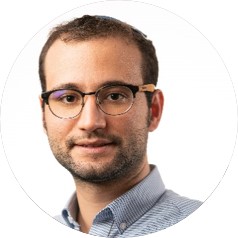
Dr. Moti Freiman

[pb_slideshow group=”2″]
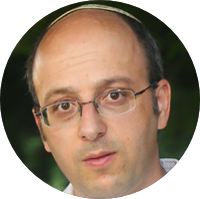
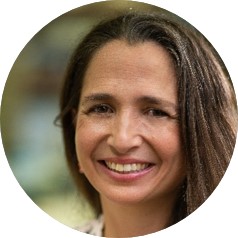
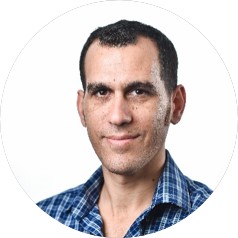
Dr. Freiman is the director of the Technion’s computational MRI lab, a senior lecturer with the faculty of Biomedical Engineering at the Technion and a Taub fellow in the Technion’s program for leaders in Science and Technology. Dr. Freiman’s research focus is on deep-learning based methods for MRI image acquisition and analysis. Previously Dr. Freiman was a staff research scientist at Philips Healthcare and prior to joining Philips, he was an Instructor of Radiology at the Harvard Medical School and a Research Associate at the Computational Radiology Laboratory (CRL) at Boston Children’s Hospital. Dr. Freiman is the author and co-author of more than 40 journal and full-length conference papers, holding 6 US granted patents, and serve as a Program Committee Member at several prestigious International conferences in the medical image analysis domain.

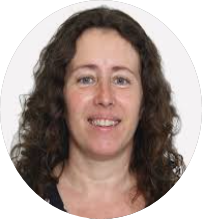
Dr. Danny Eytan

[pb_slideshow group=”2″]

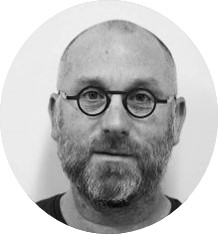
Danny completed medical school and a PhD in neuroscience and biophysics at the Technion institute of technology in Israel. Later he continued his research training as an Aly Kaufman postdoctoral fellow studying dynamics and adaptation processes in network of cortical neurons. After completing of his pediatric residency at Rambam Medical Center in Haifa, Israel, Danny continued to a clinical and research fellowship in pediatric critical care at the Hospital for Sick Children in Toronto. Danny currently works as a staff physician in the pediatric critical care unit at Rambam Medical Center and holds an appointment as an assistant professor at the Technion.


His research interests include advanced patient monitoring and applied systems physiology. He focuses on combining tools from diverse fields such as machine learning and nonlinear dynamical systems to create better physiological models and improve prediction of disease and patient’s states and trajectories. Essentially, he is trying to implement a personalized medicine approach for critically-ill children whose clinical state evolves on a minute by minute basis by using the patient’s “physiome” and clinical attributes.


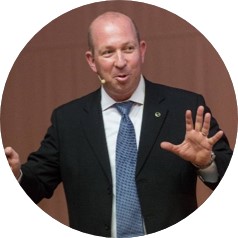
Prof. Alex Bronstein

[pb_slideshow group=”2″]

I am a computer scientist, engineer, inventor, and technology entrepreneur working on theory and applications both in academia and industry. My interests span several fields that can be broadly classified as computer vision and graphics, computational geometry, machine learning, and signal processing, with geometric data analysis being a frequent motif. At the Technion, I head the Center for Intelligent Systems and the VISTA Lab in the Department of Computer Science. In the industry, I participated in various capacities in startup companies, some of which successful and some other less so.

Since the acquisition of my startup Invision, I have been a Principal Engineer in the Perceptual Computing Group at Intel Corporation developing Intel’s 3D sensing technology, RealSense. I was a co-founder and am presently the Chief Scientist of the Israeli startup VideoCites offering internet-scale video search services to businesses.

I love doing research, building and disassembling things, teaching and sharing ideas with other people. In my spare time I enjoy reading, running, listening to and playing music, exploring the world, taking pictures, sailing my yacht, collecting Michelin stars and watching the real ones. When I am not traveling, my geolocation is peaked bi-modally in Haifa and Sardinia.

I invite excellent graduate students to visit my lab at the Technion and take part of the cool stuff we are doing there.

Links to the websites
Personal:             https://bron.cs.technion.ac.il/
VISTA lab:            https://vista.cs.technion.ac.il/
LinkedIn:              https://www.linkedin.com/in/albronstein/?originalSubdomain=il

Prof. Naama Geva-Zatorsky

[pb_slideshow group=”2″]

NAAMA GEVA-ZATORSKY, Assistant Professor at the Technion, The Rappaport Faculty of Medicine. Ph.D., at the Weizmann Institute, Systems-Biology with Prof. Uri Alon, completed with honors and received the JFK, Teva and Barenholz awards. Postdoctoral studies at Harvard Medical School, in the lab of Prof. Dennis Kasper, for which she received the Human Frontiers and EMBO fellowships, as well as the UNESCO-L’Oreal awards (national and international). During her postdoc, in addition to characterizing the host response to ~60 different gut bacteria, from across phyla1, she also applied metabolic labeling to enable, for the first time, visualization of anaerobic gut microbes, in real time, and in association with the host2. In her lab, with her team, she is applying Systems-Biology thinking strategies with Microbiology, Immunology, and Bacteriophage biology to study the mechanistic and functional interactions of the gut microbiota with mammalian host physiology in health and disease, and under varying conditions. They are also developing tools to study microbe-host interactions in a dynamic manner and in natural environments. Geva-Zatorsky recently received the Johnson&Johnson WiSTEM2D award, the CIFAR-Azrieli Global Scholar award of the Humans&Microbiome Program, the Alon and Horev fellowships, and the Human Frontiers career development award.
1.  Geva-Zatorsky, N. et al. Mining the Human Gut Microbiota for Immunomodulatory Organisms. Cell 168, 928-943 e911, doi:10.1016/j.cell.2017.01.022 (2017).
2.  Geva-Zatorsky, N. et al. In vivo imaging and tracking of host-microbiota interactions via metabolic labeling of gut anaerobic bacteria. Nat Med 21, 1091-1100, doi:10.1038/nm.3929 (2015).

Dr. Anat Ilivitzki

[pb_slideshow group=”2″]

Dr. Anat Ilivitzki is Director of the Pediatric Radiology Unit at Ruth Rappaport Children’s Hospital, and an Attending Physician and Radiologist in the Department of Radiology at Rambam Health Care Campus. Dr. Ilivitzki graduated from the Rappaport Faculty of Medicine of the Technion-Israel Institute of Technology, and completed her internship and residency in medical imaging at Rambam, followed by fellowship in pediatric radiology at Schneider Children Hospital. This was followed by short rotations at Cincinnati Children’s Hospital in the United States, and a six month of research in pediatric PET- MRI in Lucile Packard Children’s Hospital in Stanford. Dr. Ilivitzki is a clinical senior lecturer at the Technion’s Rappaport Faculty of Medicine. She has participated in a wide range of clinical research projects, and her main fields of interest are bowel imaging (sonography and MRI), low radiation protocols in pediatric CT studies, imaging pediatric oncologic patients (all modalities),and invasive procedures under sonographic guidance in pediatric patients.

Prof. Danny Lange

[pb_slideshow group=”2″]

Dr. Danny Lange is a Digital HealthTech Entrepreneur and Visiting Scientist at Technion – IIT.
After completing his D.Sc. in Electrical Engineering at Technion, he joined the Computational Molecular Biology group at HP Labs.

He then embarked on an entrepreneurial career and founded several startup companies, all based on his ideas and inventions,

including EarlySense (raised over $150M, global sales) and IDesia Biometrics (sold to Intel Corp).

Linkedin  https://www.linkedin.com/in/dlange66/

Prof. Omer Yehezkeli

[pb_slideshow group=”2″]

Omer Yehezkeli has received his Ph.D. in Chemistry from the Hebrew University of Jerusalem, under the supervision of Prof. Itamar Willner.  Later Omer joined the laboratory of Prof. Jennifer N. Cha at the Department of Chemical and Biological Engineering, University of Colorado, Boulder. During his Post Doc research, Omer received The American Institute of Chemist Post-Doctoral Award. Since Oct. 2017 Omer serves as a faculty member at The Faculty of Biotechnology and Food Engineering, Technion. His work is focused on the interface between nanomaterials and biological components for a variety of sensing and energy applications.

The laboratory of Bio-Nano interface

Lab Website http://yehezkeli.net.technion.ac.il

Google Scholar https://scholar.google.co.il/citations?user=oHbzJ-EAAAAJ&hl=en

LinkedIn https://www.linkedin.com/in/omer-yehezkeli-0b2a2620/

Twitter https://twitter.com/YehezkeliL

Prof. Joachim Behar

[pb_slideshow group=”2″]

Dr. Behar is heading the Artificial Intelligence in Medicine Laboratory (AIMLab.) at the Technion faculty of Biomedical Engineering, Haifa, Israel. The lab focuses on the usage of machine learning in medicine within the context of physiological time series analysis with a specific focus in sleep medicine and cardiology. Dr. Behar is twice winner of the MIT-PhysioNet/Computing in Cardiology competition. He has authored and co-authored over 33 journal papers in leading engineering, physiology and medical journals and contributed many open access databases of physiological waveform and open source code (e.g. PhysioZoo, fecgsyn). He is editor for the journal Physiological Measurement and has been on the program committee of the Computing in Cardiology international conference since 2013. Joachim holds a PhD in biosignals processing and machine learning from the university of Oxford which was completed under the supervision of Prof. Gari D. Clifford and Dr. Julien Oster. He holds a MEng from l’Ecole Nationale Superieure des Mines de Saint-Etienne in France in Engineering. He completed his postdoctoral study in computational physiology under the guidance of Prof. Yael Yaniv at the Technion where he worked on mathematical modelling of sinoatrial node cells.

Laboratory: Artificial intelligence in medicine laboratory (AIMLab.)

Website: https://aim-lab.github.io/

Twitter: https://twitter.com/lab_aim

Linkedin: https://www.linkedin.com/in/joachim-behar-04730b78/


Prof. Havazelet Bianco-Peled

[pb_slideshow group=”2″]

Prof. Havazelet Bianco-Peled is an expert in the area of bioadhesion and biomedical polymers. She has received several awards for her professional accomplishments. She has written about 90 research publications, edited a book and has ten patent applications either granted or pending. Bianco-Peled is the founder and CSO of SEAlantis Ltd., a company that develops, manufactures and commercialize novel biomimetic tissue adhesives base on a technology invented in her lab. Her current research interests include: mucoadhesion, tissue adhesives, nano-materials for biomedical applications, drug delivery, physical characterization of biological, biomedical and biomimetic nano-systems.

Link  


Prof. Alon Wolf

[pb_slideshow group=”2″]

Prof. Wolf earned all of his academic degrees from the faculty of Mechanical Engineering at the Technion Israel Institute of Technology in Israel. Immediately after receiving his Ph.D., he joined the robotics institute at Carnegie Mellon University (CMU) as a research scientist, as well as the Institute for Computer Assisted Orthopaedic Surgery as a research faculty and the University of Pittsburgh School of Medicine as an Adjunct Faculty of CT Surgery. In March of 2006 Prof. Wolf returned to Israel and joined the faculty of Mechanical Engineering at the Technion. Here he founded a new research lab, the Biorobotics and Biomechanics Lab (BRML). The objective of the research in the BRML is to develop fundamental theories in bio-kinematics and biomechanics as well as to apply these theories to applications in medical robotics and biorobotics. Prof. Wolf’s work was published in more that 170 publications in leading international scientific journals, Book chapters, Patents, and conferences (as key note and invited lectures). Prof. Wolf is a co-inventor and co-founder of Medrobotics Corporation and is the director of FIRST in Israel, a volunteering activity to promote STEM (science technology and math) among young school students (15,000 participants in Israel). Prof. Wolf is also an Associate Editor for the prestige journals of Clinical Biomechanics, ASME journal of mechanisms and robotics, and serves in the editorial board of several leading international journals. He won numerous research awards and was elected to the 2016-2017 IEEE Engineering in Medicine & Biology Society Distinguished Lecturer Program and was awarded Fellow of the American Association of Mechanical Engineers.
Lately, he was appointed as the director of the Israeli Olympic Sport Research Centre. Prof. Wolf’s urban search and rescue snake robot and his surgical snake robot were elected best technology of 2012 and 2014 respectively, by the prestige journal of popular science.

In October 1st 2019 Prof. Wolf took the office of Technion Vice President for External Relations and Resource Development.


Lab: http://brml.technion.ac.il/

Linkdin: https://www.linkedin.com/in/alon-wolf-38587115/